
A screwdriver tells you more about a house than any listing photo. Press one into a baseboard, and if it sinks like wet cardboard, something has been eating that wood for years. Sellers usually call me right at that moment, a day after a buyer’s inspector found the same soft spot and the contract fell apart. Termite damage changes the price, and that’s about all it changes. Homes with chewed studs and soft subfloor change hands in Florida every week. From what I’ve seen buying these, you can sell a house with termites without much drama. What’s left to figure out is who’ll buy it and how much the damage costs you.
Can You Sell a House with Active Termites?
Yes, you can sell a house with termites, and you don’t need a clean pest report to put a sign in the yard. Nothing stops a homeowner from listing a property with live termites or old damage. The law does expect honesty about what you know, though.
In most states, sellers have to disclose known defects that reduce value and aren’t obvious during a walk-through. Some states put this on a required disclosure form. Others rely on court rulings that arise when a buyer sues. Selling “as is” usually doesn’t cancel that duty, which surprises homeowners who think those two words work like a legal force field. A short call with a local real estate attorney will tell you what your state requires.
Early last year, a retired couple called me on a Tuesday with an auction date already on the calendar. They were three months behind on the mortgage. Drywood termite frass was piling up on the windowsills of their enclosed porch, and their son had just told them nobody would touch the place. We closed before the auction. Stories like theirs are why we buy houses in Florida with termite damage, missed payments, or both.
Where termites really hurt you is the buyer pool. Lending rules cut out a chunk of your market the moment an inspector writes up an active infestation. FHA and VA loans require the house to be free of live wood-destroying insects, and damage that affects soundness must be repaired first. Conventional lenders often follow suit once an appraiser notes it. That leaves cash buyers, renovation-loan buyers, and investors, a smaller crowd but a real one.
If you want to skip the repairs, you can contact us for a cash offer on the house as it is.
How Does Termite Damage Impact Your Home’s Value?

Termites usually cost you more in buyer confidence than in lumber.
The repair bill usually won’t sink you. Angi’s 2026 cost guide puts most termite damage repair between $1,000 and $10,000, with a national average near $3,000. Jobs on beams and load-bearing walls land at the top of that range or past it, and replacing chewed wood siding on a large home can climb to $37,500. Treatment is billed separately.
Fear is the expensive part. A buyer who reads “active infestation” on a report pictures a colony behind every wall, and their offer drops by far more than the contractor’s estimate. Real estate appraisals on damaged properties come in soft, too, because nearby comparable sales all have intact framing. A cash-for-houses company in Palatka and other Florida cities may offer an alternative when repair costs and buyer concerns make a traditional sale difficult.
Insurance won’t rescue you. In March 2026, the National Pest Management Association estimated that termites cause $6.8 billion in property damage across the U.S. every year. Standard homeowners policies almost always exclude it. You pay for the repair yourself, or you take a lower price.
Where the damage sits matters more than how much there is. Drywood termites in a decorative beam barely move the needle. Subterranean termites working up through a sill plate into the foundation framing change the whole conversation. In my experience, Formosan colonies can hollow out structural wood fast enough that a repair estimate written in spring looks optimistic by fall.
Do You Need a Termite Inspection Before Selling Your Home?
Plenty of owners order a WDO inspection hoping for a clean report to hand buyers. It comes back with four pages of findings, and two read “inaccessible area, further inspection recommended.” Now you own written proof of a problem you can’t size up yet.
That’s no reason to skip it, just a reason to know what you’re paying for. In Florida, a wood-destroying organism report must be prepared by a licensed pest control operator, not a general home inspector. A home inspector can flag soft wood, but only the pest company issues the WDO. Before you book, check that the company’s license is current with the Florida Department of Agriculture and Consumer Services.
A pre-listing inspection makes sense when you plan to fix things and list on the open market. You get to pick the contractor and walk into negotiations knowing what the buyer’s inspector will find anyway. Once the treatment’s done, keep the receipt and any transferable warranty, since buyers will ask for both.
It makes less sense when you know you’re selling as-is to an investor. Cash buyers conduct their own inspections and price based on their own scope of work. Paying for a report that confirms what the sagging floor already told you is money you won’t get back.
I keep seeing one pattern. A seller orders the inspection, reads the summary, panics at the word “structural,” and pulls the house off the market for six months. Six months of mortgage payments often costs more than the repair would have. Read the whole report, and ask the inspector which findings are active and which are old. If a buyer’s inspector found the termites first, it helps to know when a buyer can back out after inspection in Florida and what that means for your contract.
What Are the Termite Disclosure Requirements for Sellers?
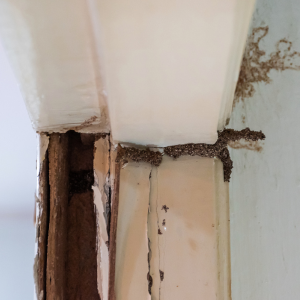
Neither Florida nor Georgia requires a general seller disclosure form or a termite form. Florida does require a separate flood disclosure, which doesn’t cover termites. Your real duty comes from case law, and it applies whether you put it in writing or say it out loud.
Florida is stricter. Under Johnson v. Davis, a seller who knows about a hidden defect that hurts the home’s value has to disclose it, even in an as-is sale. Georgia is “buyer beware,” up to a point. You can’t hide damage, and you have to answer direct questions honestly. Covering active termite damage with fresh boards may count as fraud.
Georgia also has the Official Georgia Wood Infestation Inspection Report, often called a termite letter. Only a licensed pest company can issue one, and lenders often ask for it. In either state, disclose current and past infestations plus every treatment, with dates and methods. Describe the damage and attach any WDO reports or termite letters. Repaired damage still gets disclosed.
Your agent has a separate duty. Florida Statute 475.278 requires licensees to disclose known facts that materially affect value and aren’t readily observable. Georgia puts a similar duty on a seller’s agent.
Worried disclosure invites a lowball offer? Usually it’s the opposite. A recent treatment receipt and pest report show a seller who handled the problem, and that’s the file I like to see. Vague sellers get priced for the worst case. Skipping disclosure can lead to rescission or repair damages long after closing. A local real estate attorney can tell you which time limits apply.
How Do You Price a Termite-damaged House for Sale?
“If I cut the price by the cost of repairs, I’m paying twice.” I hear that one every week, and it’s half right. You’re paying once, in a currency the buyer chose.
Price it the way a buyer with a contractor on speed dial would. Start from the honest market price for a similar home in sound condition. Subtract a real repair estimate from a licensed company, then subtract again for risk and time. Most owners resist that second cut, though it’s usually the one that gets the house sold. Nobody pays full retail to inherit an unknown.
You’ve got a few ways to set up the transaction. You can treat and repair before listing and price at market. Another route is to list at market and offer repair credits at closing, so the buyer handles the work. Or you price it as-is, well below comps, and let the discount do the negotiating for you. Termites are one item on a longer list, and our guide to selling a house that needs repairs in Florida walks through how each route plays out.
Credits sound generous and often backfire. A lender may cap what credits can cover, and FHA and VA files won’t fund with an active infestation sitting in the file, however big the credit. If you’re after financed buyers, treatment happens before closing, or the loan dies at underwriting.
Overpricing burns more equity than the termites did. Every week on market shows up in the property’s history. So does every price cut and every canceled contract, and the next buyer reads that history as leverage. Pricing it right the first time, with the paperwork attached, beats drifting down in $10,000 steps over four months.
If you want to skip the repairs and sell as-is, Yellow Card Properties can give you a cash offer based on the home’s condition.
Cash Offer or Traditional Listing: Which Selling Option Is Best?

Choose wrong here, and you could spend three months collecting inspection reports from buyers who walk. Then you sell for less than your first offer, after carrying the mortgage the whole time.
Jacksonville gives you a fair picture of the clock. As of October 20, 2026, Momentum Realty’s MLS data put the city’s median sale price at $315,000, down 1.3% from a year earlier. Homes that sold spent a median of 43 days on the market. That window measures homes in sellable shape. Add financing time, a failed inspection, a relist, and a termite-infested house to the traditional path, and it can easily run four or five months start to finish.
A traditional listing is the right call when the damage is cosmetic, you’ve got money for extermination and repairs, and your timeline is flexible. You’ll net more. A good real estate agent with photos of a treated, repaired house pulls retail buyers, and retail buyers pay retail.
Cash fits a different set of facts. Maybe you’ve got an active infestation you can’t afford to treat, or structural repairs you can’t finance. Maybe there’s a foreclosure date on the calendar, an inherited property three states away, or a tenant situation you’re done managing. Investor home buyers in Gainesville and the surrounding Florida cities can take the property as it sits.
Frequently Asked Questions
Do I have to disclose termite damage when selling a house in Florida?
Yes. Florida law requires sellers to disclose known material defects that aren’t readily observable, and termite damage qualifies. Put all of it in writing, including past or active infestation, prior treatment, and any damage, repaired or not. Hiding it invites a lawsuit after closing. Cash buyers expect disclosure anyway, and with an investor it rarely kills the sale. It just shapes the price.
Will a buyer’s lender approve a mortgage on a termite-damaged home?
Usually not without repairs. FHA and VA loans are the strictest, and conventional lenders often want proof of treatment and structural soundness before funding. If an appraiser flags active infestation or damaged framing, the file stalls until a licensed pest operator, and often a contractor, signs off. That’s why termite houses tend to sell to cash buyers or renovation-loan buyers.
Can I sell a house with active termites without treating it first?
To a cash buyer, yes. Investors buy as-is and handle fumigation after closing on their own schedule. In the traditional market, it’s much harder, since most financed buyers need treatment records and a clear WDO report before their lender will fund the loan. If you want to sell a house with termites and skip the treatment step, a cash buyer is the simplest route.
If you’re sitting with a WDO report you didn’t expect, or you already know what’s under the floor, you don’t have to decide anything today. Get the repair bid, get an agent’s number, and get a written cash offer from Yellow Card Properties so you can compare all three on paper. No pressure, no cleanup, no obligation. Just a straight number on a house that’s been more work than it’s worth. Call us at 904-539-4420 to get your cash offer.
Helpful Florida Blog Articles