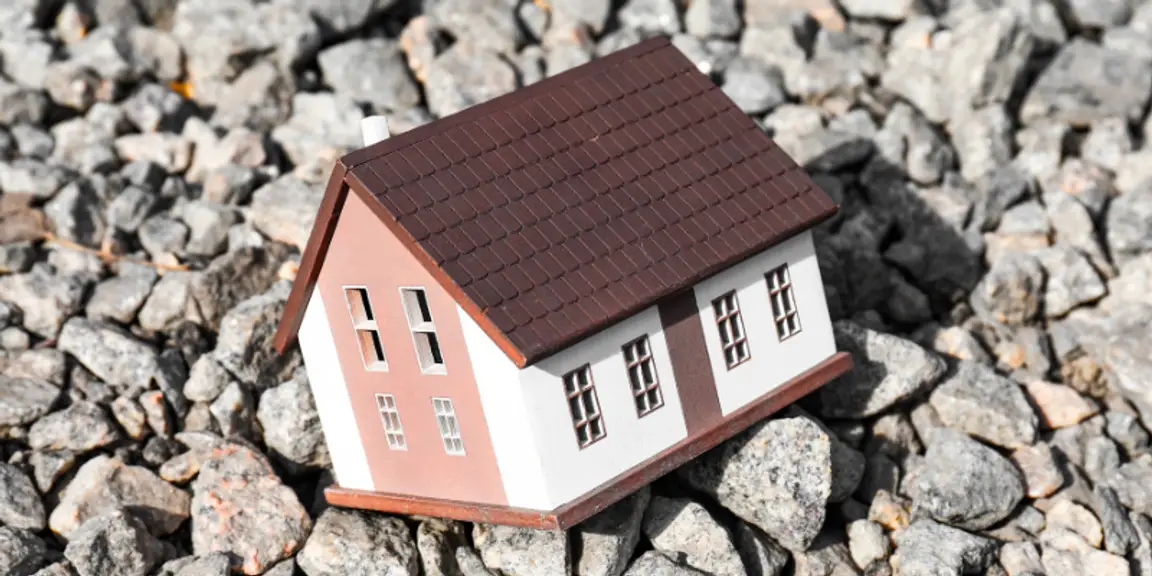

You spot the first crack running down your living room wall, and your stomach drops. Then you work out what it means. Florida homes have been sitting on the market a median of 72 days as of July 2026, and that’s homes with nothing wrong. Foundation problems change the math completely. The good part is you don’t have to drain your savings on repairs before you can move on. Homeowners sell homes with foundation problems every week in this state. They pick a selling strategy that fits the situation instead of defaulting to the open market.
What Causes Foundation Damage in Florida Homes
Florida’s median sale price sat around $393,584 in July 2026, and plenty of that inventory rests on soil that moves. Sandy ground, dissolving limestone, and a water table that never holds still all push foundations out of level. Foundation trouble hits 1970s ranch homes and 2018 builds alike. Most homeowners have no idea until the drywall tells them the house is moving.
Pasco, Hernando, and Hillsborough counties make up what insurers call sinkhole alley, and Marion County isn’t far behind. The dramatic collapses get the headlines. The slower problem does more damage statewide. Soil dries out through a spring drought, then a summer of afternoon storms soaks it. Expand, contract, repeat. That cycle works on your foundation for years before anything shows up inside the home.
Poor drainage speeds all of it up. Grade a yard toward the home instead of away from it, and you’ve built a machine for pushing water under the slab. Hurricane rain saturates the soil, the ground swells, then it shrinks back and leaves voids under the foundation. Flat lots and clogged gutters are the ones we see fail first.
If your home has foundation settlement, sinkhole concerns, or structural damage, Yellow Card Properties can provide a fair cash offer for its current condition, allowing you to sell without costly repairs or a lengthy listing process.
How to Identify Foundation Problems When Selling Your House in Florida
It’s a familiar story. Two listing agreements expire, not one offer between them. The ranch home looked fine from the curb. Inside, cracks ran through half the house and the floors told the rest. Foundation problems like these turn up more often than homeowners expect.
Doors and windows that stick are usually the first tell. Rule out humidity first, since this state hands you plenty of it. If the frames sit out of square anyway, something underneath them moved. Cracks along interior walls and at the ceiling line tend to follow, and they get longer.
Then look down. Cracked tile, grout coming loose, and floors that slope are symptoms of a foundation that already shifted. Buyers read them as a structural question mark on the whole property. Roll a marble across the room. If it picks a direction and keeps going, your buyers will find the same slope.
Outside, watch for stair-step cracks in brick, long stucco fractures, and structural damage to the foundation wall itself. Water intrusion, rust stains, musty smells, and white mineral deposits belong on the list too, because moisture and foundation problems travel together. The more of these a buyer counts, the faster they ask for another inspection. Homeowners who’d rather skip that whole sequence sometimes look at cash house buyers in Palm Coast and other Florida cities instead of funding major foundation repairs before selling.
How Foundation Problems Affect Property Value

Florida buyers get jumpy about structural damage, sinkholes, and shifting soil, and that nervousness lands in the price. Even a small foundation issue triggers inspections. Inspections mean fewer offers and a longer selling window than a similar home with no structural questions would see. To plenty of buyers, foundation damage reads as an open-ended bill.
Severity drives the discount. Industry and appraiser estimates put unrepaired foundation problems at roughly 10 to 15 percent off a property’s market value, and steeper for serious structural damage. Hairline settlement cracks barely move the value. A property that needs underpinning is another story.
Your local market matters as much as the damage does. Tight supply and competing offers will pull some buyers past a structural flaw they’d walk from in a calmer year. A slow market does the opposite. Price cuts get bigger, listings sit longer, and pricing the property honestly on day one matters more than anything else a seller does.
Florida Disclosure Laws for Selling Houses with Foundation Problems
Sellers talk themselves into hiding things. Patch the crack, repaint, say nothing. That thinking is how homeowners end up in litigation two years after closing. Even an honest slip can get costly.
Under Johnson v. Davis, the 1985 Florida Supreme Court case that still governs these sales, you have to disclose known defects that materially affect value and aren’t readily observable. Foundation damage qualifies. Sinkholes carry their own statute. Section 627.7073(2)(c) requires a seller whose sinkhole claim was paid by the insurer to disclose before closing that the claim was paid, and whether the full proceeds went into the repair. Once an engineer or contractor puts findings on paper, those findings become part of what a buyer needs to see.
A conversation in the driveway with a buyer won’t protect you. Florida doesn’t mandate one specific disclosure form for general defects, but putting every disclosure in writing and into the transaction file is what keeps sellers out of court later. Buyers use it during due diligence to price the home properly, which is exactly what you want them doing.
Selling as-is doesn’t erase any of this. Real estate attorneys lean toward over-disclosing, because courts side with buyers when a seller knew about a material defect and stayed quiet. Being upfront also weeds out the buyer who was going to renegotiate at day 12 anyway. If your goal is to sell your house fast in Gainesville and other cities in Florida, saying the hard part out loud early keeps the sale moving.
Foundation Inspection Requirements and Buyer Expectations in Florida
Inspections are where these property sales usually stall. Buyers treat that structural report as the final word on both value and risk. A buyer using a mortgage often ends up ordering a structural inspection or an engineer’s report once the appraiser flags a condition, and the lender waits on that answer. If the answer comes back bad, the sale slides or dies.
FHA is strict here. The foundation has to be stable, with no significant cracks, shifting, or settlement, and the home can’t carry major structural defects. Repairs happen before closing, whether the buyer or the seller pays for them. A buyer who can’t get that done sometimes shifts to an FHA 203(k) renovation loan and finances the foundation work into the mortgage instead. Expect $500 to $1,500 for a structural engineer’s report, more when the case is complicated. A full sinkhole investigation in Florida, with ground-penetrating radar, soil borings, lab work, and a stamped report, tends to land between $3,500 and $7,500. Those reports join the property’s disclosure history the day they’re issued.
Cash buyers work differently. Many send their own contractor through, price the foundation repairs, and buy without a lender’s inspection requirements hanging over the sale. That changes nothing about a seller’s disclosure duty. Whatever you know, and any pre-sale inspection you’re holding, still goes to the buyer.
Should You Repair Foundation Issues Before Selling or Sell As-is in Florida
Most sellers assume repairs come first. That’s often the wrong financial call. Serious structural work, full underpinning or a foundation replacement, runs $10,000 to more than $100,000, and sellers rarely recover all of it at closing. Worth knowing, though: the typical foundation repair is nowhere near that. National averages sit closer to $5,000, with most jobs falling between $2,200 and $8,100.
The old advice about stigma gets one thing backwards. Foundation repairs done properly and documented properly do help a seller. Research on Hillsborough County sales found homes with repaired sinkhole damage sold at a small single-digit discount, while unrepaired ones took a hit closer to a third of their value. County property appraisers behave the same way. Repaired gets a modest cut; unrepaired gets gutted. The paperwork proving the fix is worth more than most homeowners assume.
Your situation decides the rest. Relocating on a deadline, going through a divorce, or short on cash, and a cash buyer who takes the home as-is beats four months of repair scheduling. Speed and certainty carry real value for a seller. Sometimes they’re worth more than the top of the price range.
Damage severity and local market conditions fill in the last piece. Minor settling cracks are usually worth fixing before you sell. Major structural work involving underpinning or soil stabilization often isn’t, especially in a market where buyers have plenty of other homes to tour.
Foundation Repair Costs for Florida Homeowners Before Selling
Two quotes on the same property can differ by thousands. Soil conditions, how easily a crew reaches the foundation, and the repair method all move the number. Pier counts run from a handful for one settling corner to twenty or more for a full side of the home, at roughly $1,000 to $3,500 per pier depending on type. Florida crews reach for helical piers, compaction grouting, and chemical or polymer grouting more often than push piers, which suit sites where bedrock sits shallow. Soil borings decide the method, not a statewide default. For light slab settlement, polyurethane slab jacking runs about $8 to $25 per square foot, and most companies hold a job minimum around $300 to $700.
Drainage and waterproofing land on top of that. A French drain runs roughly $3,000 to $8,000 for exterior or crawl space work, and an interior perimeter system costs a lot more. A structural engineer’s assessment and written report is usually its own line item. Permits and inspections are the small one, usually $75 to $500 depending on your county.
Then there’s the part homeowners forget, which is putting the home back together. Structural repairs tear up flooring, split drywall, and disturb fixtures. Budget another 10 to 20 percent on top of the structural cost for drywall, paint, concrete, and landscaping before the property is ready to photograph. Leave that out of your math, and it arrives as a surprise mid-project.
If the cost of foundation repairs feels overwhelming, you may not need to invest thousands of dollars before selling. Contact us today for a no-obligation cash offer and see how you can sell your Florida home as-is, without repairs, inspections, or costly delays.
How to Prepare Your Florida Home for Sale with Known Foundation Issues
Preparing a home with foundation problems for sale is about honesty, not a cover-up. Pull your inspection reports, repair estimates, and insurance paperwork into one folder. Buyers who can see the real condition stop imagining a worse one. Paperwork beats a shrug every time, and sellers who bring it get taken seriously. It’s also what keeps a negotiation from collapsing in week three.
Photograph the cracks as they change and date the files. Foundation problems don’t hold still, and a photo record shows a buyer you’ve been tracking the damage rather than hoping nobody would notice.
Get more than one expert opinion before a buyer forces the issue. Two contractors will often propose two different foundation repairs on the same house, and handing a buyer options is better than handing them a single frightening bid. Clear out the closets, garage corners, and crawl space access so an inspector can actually reach the affected areas.
Then price the home against reality. Look up what similar homes with structural issues closed at, not what the neighbor with the perfect slab is asking. Overpriced homes with foundation damage sit on the market. A well-priced house sells, flaws and all.
Documents You Should Gather Before Selling

A Florida sale with foundation problems carries more paperwork than a clean one. Buyers ask for property records showing how bad the damage runs, what’s been repaired, and whether the property has any sinkhole history. Getting it organized before you list keeps negotiations from stalling out.
Start with engineering reports, structural inspections, foundation repair estimates, and contractor write-ups. If the property has sinkhole or ground settlement history, add the geological reports, insurance claim records, and the remediation records. That’s the file a serious buyer uses to price the property’s risk instead of guessing at it.
Already had work done? Gather the invoices, warranties, permits, and final inspection reports. Paperwork is what proves the foundation repair was done correctly and to code. Transferable warranties are the valuable ones, since the protection follows the property to its next owner.
Insurance records deserve their own stack. Include claims for sinkholes, foundation repairs, and any other structural damage. Sellers who keep disclosures and repair records straight through a claim are the ones who don’t get sued after closing.
Negotiating the Sale of a Florida House with Foundation Damage
Foundation repairs belong at the center of the negotiation, not somewhere a seller hides them. Most buyers will ask for a price reduction, a credit at closing, or both if a seller lets them.
Cash buyers usually price the foundation repairs into the offer up front and don’t circle back for credits. That removes most of the inspection contingencies a buyer can use to blow up a traditional sale. For a seller who needs a firm closing date, the certainty is the whole point.
Financed buyers carry more risk for you. Lenders decline loans on homes with structural issues, and a signed contract can still die in underwriting. An inspection may surface moisture, active settlement, or an old foundation repair that was done badly. Accurate estimates in hand from the start are your defense against all three.
Sellers should collect their own repair estimates early so they have something to set beside the buyer’s number, which will always be the high one. Offering a closing credit instead of doing the work yourself avoids contractor scheduling and cost overruns. Understand the leverage, too. A slow market with heavy inventory hands buyers the advantage, so a strong market is when a home with foundation damage negotiates best.
Cash Buyers and Investors Who Purchase Florida Homes with Foundation Damage
Cash buyers clear the biggest hurdle in these sales, because there’s no appraisal and no mortgage approval to satisfy. Financed buyer offers often collapse once structural issues surface, which is why investors end up buying most of the homes with foundation problems.
Plenty of investment firms and cash home buyers in Florida focus on this exact category, including homes with settlement, pier damage, or sinkhole history. Experienced cash buyers already know Florida soil, foundation repair pricing, and structural risk, so they can evaluate a property quickly without a stack of engineering reports.
Investor offers usually start at 70 to 80 percent of the property’s after-repair value, minus the repair cost. That sounds harsh until you subtract months of holding costs, the foundation repairs you’d otherwise fund yourself, and the odds a traditional sale falls apart. Net to net, the gap is usually narrower than homeowners expect.
Demand for foundation-damaged properties has grown as insurance premiums, HOA fees, and storm risk push more Florida homeowners toward a quick exit. Most cash buyers will flex the calendar as well, whether you need out in two weeks or need to stay through the school year.
Frequently Asked Questions
How Much Less Should I Expect to Get for a House with Foundation Issues?
Industry and appraiser estimates put the hit at roughly 10 to 15 percent below similar homes with no structural issues, and steeper when the damage is serious. The real number depends on severity, your local market, and whether you’re selling to a retail buyer or an investor. One useful data point: research on Hillsborough County sales found repaired sinkhole damage cost sellers only a small single-digit discount, while unrepaired damage cost roughly a third of the value. Repairing the foundation and documenting it does pay.
Can I Sell My House Without Fixing Foundation Problems First?
Yes. Cash buyers and investors buy homes with foundation damage routinely and handle the repairs on their own dime. That includes a sinkhole-damaged home taken as-is. Traditional buyers usually can’t do the same, because their lenders want remediation finished before closing. Selling as-is costs a seller some price and saves the repair bill along with the timeline risk.
Do I Have to Disclose Foundation Problems to Buyers in Florida?
Yes. Foundation damage materially affects value, so Johnson v. Davis puts it squarely inside what a seller has to tell a buyer. If a sinkhole claim on the property was paid, state law adds a specific disclosure about that claim and whether the proceeds covered the repair. Failing to disclose invites a lawsuit from the buyer. The duty applies whether you list with an agent or sell straight to a cash buyer.
What’s the Hardest Month to Sell a House with Foundation Problems?
October through December is the roughest stretch in Florida. The tail end of hurricane season runs into the holidays, buyer traffic thins out, and listings sit roughly two weeks longer than they do in spring. Foundation problems make a slow month slower, since buyers with time on their hands go tour three other homes instead.
If you want to talk through your options with foundation problems, Yellow Card Properties specializes in these exact situations. We’ve helped hundreds of Florida homeowners sell properties with structural issues, and we can give you a realistic assessment of your home’s current market value. No pressure, no obligation. Contact us at 904-539-4420 today to discuss your situation, get answers to your questions, and learn about the options available for selling your home quickly and efficiently.
Helpful Florida Blog Articles
- How Long Should You Live in a House Before Selling in Florida?
- Selling a House to a Family Member in Florida
- Should I Stage My House to Sell in Florida?
- Do Open Houses Still Work When Selling a Home in Florida?
- How to Sell an Apartment in Florida
- How to Sell a House with Flood Damage in Florida
- How Much Does a Realtor Charge to Sell a House in Florida
- Home Staging Costs In Florida
- Sell Your House With Mold Problems In Florida
- Sell A Fire-Damaged House in Florida
- Selling A House with Tenants in Florida
- Selling a House with Foundation Problems in Florida
- Can You Sell a House With a Lien On it in Florida
- Documents Required for Selling Inherited Property
- Tax Implications of Selling a House Below Market Value
- Can I sell my parents’ house with power of attorney in Florida