![Eviction Procedure in [market_city]](https://image-cdn.carrot.com/eyJidWNrZXQiOiJwcm9kdWN0aW9uLmNhcnJvdC11cGxvYWRzLm9uY2Fycm90LmNvbSIsImtleSI6InVwbG9hZHMvc2l0ZXMvNTUwNDMvMjAyNi8wOC9FdmljdGlvbi1Qcm9jZWR1cmUuanBnIiwiZWRpdHMiOnsicmVzaXplIjp7IndpZHRoIjoxMTUyfSwidG9Gb3JtYXQiOiJ3ZWJwIiwid2VicCI6eyJxdWFsaXR5Ijo3MH19fQ==)


A single math error on a notice sinks more Florida eviction cases than any clever legal argument does. Not a tenant with a sharp attorney. Just the wrong number of days counted on a calendar. One small detail resets the clock and costs you weeks. Own one rental property near the St. Johns River, or manage a dozen units in Gainesville, and the rules land on you the same way. Judges enforce them precisely, even when the landlord got everything else right.
What Is an Eviction in Florida?
Say your tenant stopped paying in January. By April, you’re ready to change the locks yourself. That impulse will cost you, because eviction in Florida is a court-controlled legal process that starts with a written notice, moves through the courthouse, and ends with a sheriff walking someone off your premises. You never get to skip steps. Four months of unpaid rent doesn’t change what Florida law requires of a landlord. Change the locks or block the door, and you’ve handed your tenant a lawsuit of their own (self-help eviction is exactly that).
Eviction in Florida is a well-defined legal process that lets a landlord lawfully remove a tenant from a rental property. Chapter 83 of the Florida Statutes holds the rules: the legal grounds for eviction, the notice deadlines, and the court procedures a landlord has to follow. There’s no shortcut around any of them.
A few years back, I worked with a retired couple in Orange Park who’d been renting out their old house on a handshake. Then their tenant stopped paying, and the whole arrangement fell apart fast. They tried listing twice through agents, and both listings expired without a single offer, partly because the occupancy situation made buyers nervous (title companies flag that immediately). We bought it on a Friday. The lease got cleared through proper legal channels, and they closed without the drama they’d been carrying for months.
The average eviction in Florida takes three to six weeks. Several factors push it one way or the other. Uncontested cases move fast, sometimes to a default judgment within a month. Contested ones, where attorneys file motions and tenants pay disputed rent into the court registry, stretch out considerably.
What Are the Legal Reasons a Landlord Can Evict a Tenant?

One point most articles skip: accepting even one partial rent payment after a lease violation can legally void your right to evict for that violation. Under Florida Statutes, a landlord who accepts the full amount of rent past due, knowing about the tenant’s breach, has waived the right to proceed on an eviction claim. Landlords from Ocala to Jacksonville Beach accept a partial payment out of goodwill. I’ve watched it happen at the worst possible moment. Then the landlord’s eviction complaint gets thrown out, and nobody on their side can explain why.
Nonpayment puts more landlords in eviction court than anything else. A tenant who doesn’t pay on time can be handed a written 3-day notice demanding payment or possession. Still no payment? Then the landlord can file for eviction and let the court sort it out.
Material breaches of the lease work differently. For fixable problems like unauthorized pets or a parking violation, a Seven-Day Notice with a cure option gives the tenant seven days to correct it or vacate. Serious noncompliance by a tenant is another matter entirely. Destruction of the unit, or unreasonable disturbance, gets a Seven-Day Notice without cure, which terminates the rental agreement and tells the tenant no further rent will be accepted. The landlord has to stop cashing the tenant’s checks at that point.
Holdover tenants, the ones who stay past the lease term without a new agreement, can be evicted, too. So can squatters, though Florida runs unauthorized occupants through a separate process under Chapter 82 of the statutes.
We buy houses in St. Augustine and nearby cities, offering homeowners a fast, simple, and stress-free way to sell.
What Types of Eviction Notices Can a Landlord Serve in Florida?
A landlord who wants to end a month-to-month tenancy without alleging fault has to give 30 days of notice before the end of any monthly rental period. That number used to be 15, and plenty of guides online still work from it. The Florida Legislature amended Section 83.57, so any older guide you turn up online is probably still working from the outdated rule.
Rent-related notices run shorter than most landlords expect. A 3-day notice to pay or vacate, governed by Section 83.56(3), gives the tenant three days to pay in full, excluding Saturdays, Sundays, and court-observed holidays. Landlords use a 7-day notice to cure when the tenant can fix the violation. A 7-day unconditional quit notice covers one they can’t, meaning seven days to leave with no option to remedy.
Are you counting weekends in that three-day window? That’s the error that bites landlords most often. Slip a Saturday and Sunday into the count, and the notice period is defective, which gives the court grounds to dismiss the whole complaint.
A 2025 amendment to Section 83.56 now permits notices delivered by email under Section 83.505, as long as both parties agree to it. Hand delivery and door posting still work.
How Does the Eviction Process Work in Florida?
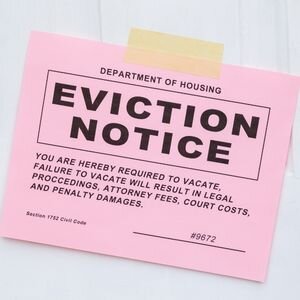
Filing a complaint without your eviction notice attached is the same as not filing at all.
Evicting a tenant runs in a fixed order. You serve the eviction notice, file the lawsuit, and serve the legal papers on the tenant. Then comes the wait for a response, a judgment, or a hearing date, the writ of possession, and the sheriff enforcing the eviction. Every stage carries its own timing requirements and paperwork. Miss one deadline and the whole thing slides back by weeks.
Once the notice period passes with nothing resolved, the landlord files a complaint with the Clerk of the Circuit Court in the county where the rental property sits. Once that complaint is filed, the landlord asks the Clerk to issue a Summons. That summons goes to the sheriff or a process server for service on the defendant.
Either the sheriff or a certified process server has to serve the summons on the tenant. The tenant then gets five business days to file a response. The day of service doesn’t count, and neither do Saturdays, Sundays, or observed legal holidays.
No response from the tenant inside that window means a default judgment. A tenant who does respond sends the case to trial instead. If the court enters judgment against the tenant, the Clerk issues a Writ of Possession, and the sheriff serves it with 24 hours’ notice before the eviction.
The Duval County Clerk of the Circuit Court publishes step-by-step eviction instructions for landlords. Worth reading before you file anything.
Sell your home for cash in Florida quickly and confidently with a fair cash offer and a simple process.
What Forms and Documents Do You Need for a Florida Eviction?
Your answer depends on whether you want possession only or possession plus money damages for unpaid rent. Three eviction complaint forms cover the possibilities. The first form covers possession of the property alone. A second covers possession plus past due rent, which, in my experience, is the more common filing. The third handles eviction for reasons other than failure to pay rent.
The Florida Bar’s website carries every standard residential eviction form for free. Key forms include the Complaint for Landlord to Evict Tenants for Failure to Pay Rent, the Eviction Claim Summons, and the Damages Claim Summons. You’ll also want the Writ of Possession, the Final Judgment Eviction form, and the Motion for Clerk’s Default for Residential Eviction.
A copy of the 3-day notice has to go with the complaint at the time of filing. Copy every form and document for each party before you arrive, because the Clerk’s office charges $1.00 per page under F.S. 28.24.
Chasing back rent under a Count II claim adds two more items: an Affidavit of Damages, and a Nonmilitary Affidavit confirming the defendant isn’t on active military duty. Skip that second one, and your default judgment stalls, even when the tenant never showed up to contest anything. The full Florida Statutes Chapter 83 is public and worth bookmarking.
If courthouse paperwork isn’t your strength, our team at Yellow Card Properties has walked Florida landlords through these situations. We know the point where selling the property outright makes more financial sense than grinding through the legal process.
Where Can Tenants and Landlords Find Help with Florida Evictions?

Plenty of landlords can’t justify an attorney for a straightforward eviction, and that’s fair. County clerk self-help resources fill some of the gap for both sides. The Palm Beach County Clerk of the Circuit Court’s Self Service Center offers access to an attorney for a nominal charge, strictly for procedural advice. Most Florida counties run similar eviction resources. The St. Johns County Clerk of Court’s evictions page walks landlords through local filing requirements step by step.
Tenants facing eviction have real options too. Miami-Dade’s eviction diversion pilot handled 2,060 cases between 2023 and 2024. Of the 617 tenants who got full attorney representation, nearly 90% had the eviction prevented or delayed. Eviction mediation programs get overlooked by Florida tenants constantly. Landlords miss them just as often.
For landlords burned out on the process, Yellow Card Properties buys properties as-is across Florida, rentals with tenant complications included, without asking you to resolve the occupancy situation first. One case near Palm Coast involved a landlord splitting assets in a divorce who needed the rental sold quickly (title work still had her ex on it). We closed on a Tuesday. She never saw the inside of a courtroom.
Legal aid organizations across the state serve tenants who qualify. Florida Legal Services, along with local legal aid societies in counties like Broward, Orange, and Duval, provides free or low-cost representation to renters who meet the requirements.
Frequently Asked Questions
How Long Does It Take to Legally Evict a Tenant in Florida?
The eviction process in Florida usually takes three to six weeks. It depends on the type of notice, how fast the summons gets served, and whether the tenant contests the case. Uncontested cases reach a default judgment more quickly after filing. Contested hearings and documentation errors push the timeline out. Court backlogs in busy metro counties like Miami-Dade or Orange add time to the statutory calendar that it never accounts for.
What Happens After a 3-day Eviction Notice in Florida?
If the tenant pays the full amount owed to the landlord or vacates within the three business days, the matter ends there. If neither happens, the landlord files a complaint for eviction with the Clerk of the Circuit Court, attaches a copy of the notice, and asks for a summons to be issued. The tenant then has five business days after service to file a response or deposit the disputed rent into the court registry.
How Do I Delay an Eviction in Florida?
Florida tenants can file a written answer with the clerk of court within five business days of being served the summons, which triggers the right to a hearing before a judge. Disputing the rent amount is a separate move: a Motion to Determine Rent, filed in that same window. The court has to hold a hearing on a timely motion before entering final judgment, which can add weeks to the timeline. Defenses like improper notice, landlord retaliation, or uninhabitable conditions are available too, though they need documentation and, ideally, legal counsel to present effectively.
What Are the New Eviction Laws in Florida?
The 2025 amendment to Section 83.56 is the meaningful one. Landlords can now serve eviction notices by email when both parties have agreed to that method under Section 83.505. The updated tenant answer form, Form 1.947(b), effective July 1, 2024, warns tenants outright that ignoring the filing instructions costs them their defenses. And the 30-day notice requirement for ending month-to-month tenancies without cause, which replaced the older 15-day rule, still catches landlords off guard more than any other recent update.
Whether you’re a landlord weighing an eviction against selling the property and moving on, or a tenant trying to figure out what’s actually coming next, we’re happy to talk through your options. No pressure, no obligation. Reach out to Yellow Card Properties anytime, and you’ll get a straight conversation, not a sales pitch.
Helpful Florida Blogs
- Sell Your Florida Home While Owing Back Payments
- Mastering Home Sale Contingencies In Florida
- Can a Buyer Back Out After Inspection in Florida
- Selling a House with a Mortgage in Florida
- Selling a House During a Divorce in Florida
- Home Appraisal Required Repairs in Florida
- Does a Seller Pay Closing Costs in Florida?
- Selling A House In A Trust After Death in Florida
- Eviction Process in Florida
- Selling a House That Needs Repairs in Florida
- Can You Stop a Foreclosure Once It Starts in Florida